
Harvest year report
since 1991
Each year tells a different story

About nature, people and devotion
The winter of 2025 was characterized by temperatures above the multiannual average and significant precipitation, predominantly in the form of rain. A notable episode of authentic winter was recorded on February 17, when the snow layer reached approximately 20 cm.
Spring started late, and the vines entered vegetation at the beginning of April. On the night of April 7 to 8, a severe episode of freezing rain, followed by temperatures of up to –3°C for three consecutive days, significantly affected the plantations. Early varieties and exposed plots suffered the most, with the frost directly affecting the shoots and buds already in vegetation, with a major impact on production. Subsequently, the April–June period was marked by a high rainfall regime, of over 240 mm, associated with low temperatures. The first inflorescences appeared only in the first week of June.
The beginning of summer brought more balanced conditions, with precipitation and temperatures close to normal. July and August continued with temperatures typical of the period, but against the backdrop of a prolonged drought.
Harvesting began on August 22, with Pinot Noir, followed by white varieties. The picking period took place without precipitation, under normal temperature conditions. The campaign ended on October 14, with Cabernet Sauvignon. In red varieties, phenolic maturity was not reached uniformly in all plots.
Starting with the end of September, abundant precipitation set in, with an above-average regime of over 200 mm, concomitant with temperatures lower than the usual values for the period. Overall, 2025 was an extremely challenging year, marked by very low production — between 1 and 2 t/ha — especially for white varieties, Pinot Noir and Feteasca Neagră. These conditions required careful adaptation of viticultural practices, as well as a slow harvest rhythm, which allowed for a minimalist approach to the winemaking process. The white varieties, especially Chardonnay and Feteasca Albă, evolved harmoniously, offering balanced wines with good acidity and clear expression. The 2025 harvest stands out for its freshness and structure. Among the red varieties, Pinot Noir had a very good evolution, while the Cabernet Sauvignon wines are distinguished by a pronounced vegetal character, specific to the year.
The autumn of 2023 was quiet and warm, with little precipitation. The cold set in only after mid-January, in the form of a short episode of 3–4 days with snow, the layer not exceeding 10 cm. Subsequently, several episodes of more consistent precipitation were recorded. Overall, the winter was mild, with temperatures above the multiannual average and precipitation slightly below normal values.
Spring came early, with high temperatures and low precipitation. The first inflorescences appeared in early May, especially in early varieties, a sign of an accelerated vegetative cycle. The summer of 2024 was dominated by a lack of precipitation, extreme drought and record temperatures maintained for long periods. These conditions led to a forced ripening of the grapes, with a major impact on the balance of ripening.
The harvest started very early, on August 13, with Feteasca Albă, and continued at a brisk pace for most varieties. There was no precipitation during the harvest campaign, the weather being consistently warm and clear. Only late autumn brought significant precipitation in terms of quantity. In total, 2024 ended with approximately 595 mm of precipitation, but a large part of it was concentrated towards the end of the year, too late to positively influence the evolution of the harvest.
In conclusion, 2024 was an extremely difficult year in terms of production and qualitative balance. Plantations were severely affected by the lack of water, vegetative growth was reduced, and production decreased significantly, ranging between 2 and 5 t/ha. The year is characterized by very low acidity and high alcohol levels. In this context, Chardonnay, Merlot and Cabernet Sauvignon stood out for their best adaptation to climatic conditions, offering wines with structure, concentration and potential for evolution.
After the end of the 2022 harvest, October continued with warm and dry weather, with low rainfall of approximately 10 l/m2. November started on the same note, with only 5 l/m2 and temperatures above the multiannual average, before, after November 20, more consistent rainfall of approximately 50 l/m2 was recorded. The winter was mild, without severe cold episodes — minimum temperatures did not drop below -10°C — and with low rainfall, insufficient to completely restore the soil water reserve. March brought an early warming, followed by a cold April, which delayed the development of vegetation. Although bud break occurred around April 10, growth stagnated until early May. Flowering began at the end of May, especially for Fetească Albă and Chardonnay.
The months of June and July were balanced, with rainfall and temperatures close to normal values. However, starting at the end of July and throughout August, temperatures rose significantly, the wind intensified, and precipitation was almost completely absent — the last active rain being recorded on August 6.
Although the total amount of precipitation for the year reached approximately 550 mm/sq m, a value considered average, the major problem was its uneven distribution, superimposed on the pedological drought that had been established for many years in Dealu Mare, with water reserves that were never replenished.
The autumn was warm and dry, which caused maturity blockages in numerous varieties, decreases in acidity and modest sugar accumulations, especially in white varieties such as Feteasca Albă and Sauvignon Blanc.
Harvesting began in the first decade of September, with Pinot Noir destined for Pacs and Sissi wines. The year 2023 put pressure on both white and red varieties. An important advantage was the small size of the berries, which favored high accumulations of anthocyanins and an intense color in the red wines. This year's white wines are characterized by moderate accumulations of sugar, resulting in lower alcohol levels, with the exception of the Italian Riesling and the Romanian Incense. The acidity is lower, and the aromatic expression is more delicate. The red wines are intense, well colored and concentrated, but, like the whites, they have lower acidity and a more restrained aromatic profile, faithfully reflecting the conditions of a demanding year.
The calm and mild autumn of 2021 set the stage for an atypical start to winter. December brought consistent rainfall in the form of rain, essential for replenishing the soil's water reserves, while temperatures remained relatively high, with a low of only -7°C for a short time. January and February continued on the same note: warm months, without significant episodes of precipitation.
The calendar spring began with modest temperatures, and this regime extended until after April 25. The last frost was recorded on April 20, which is why we can talk about a cold spring. The start of vegetation took place between April 10–15 and was uniform, with moderate fertility, around 40% in Feteasca Neagră. The summer was dominated by drought. The months of June and July were poor in precipitation, and temperatures exceeded the 35°C threshold since the second decade of July. August continued with hot days and almost non-existent rain, insufficient in quantity to alleviate water stress. September brought, in return, a welcome respite: two episodes of rain, totaling 25–35 l/m2, accompanied by a drop in temperatures. Harvesting began early, on August 22, with Pinot Noir, followed by Fetească Albă, Sauvignon Blanc and Fetească Neagră.
On September 1, approximately one third of the area had already been harvested, and the campaign ended on October 5, with Cabernet Sauvignon. Overall, 2022 was a year marked by drought, with significant sugar accumulations, low yields and low acidity. The early harvest allowed us to balance these extremes, although a slight lack of aromatic expression was felt in the white and rosé wines. In contrast, the red wines stand out for their special quality: they are concentrated, intense and well-structured. Chardonnay, Feteasca Neagră and Cabernet Sauvignon stand out in particular, wines that faithfully express the character of an extreme year and the potential of our terroir.
2021 was an excellent year for white and rosé wines from Dealu Mare. This year's stars were Sauvignon Blanc, Chardonnay, Fetească Neagră and Pinot Noir, which had good ripening conditions, favored by the slightly lower average temperatures this year.
The year began with heavy precipitation, which left its mark on the entire season. Snowfall was light and winter rains were intense, reaching up to 250 liters at the end of February.
Spring began with large temperature differences. From one day to the next, thermal values varied from highs of 20° C to lows of - 8° C, with snow and rain. The months of March and April came with low temperatures and high humidity. The atypical conditions caused the vegetation at the beginning of May to be delayed compared to the average of recent years by approximately 2 weeks and delayed flowering after June 10.
Summer once again brought us large amounts of precipitation. The rains in June and July, the lower than average temperatures and the humidity favored the appearance of powdery mildew and altered the phytosanitary conditions for the development of the vineyard. The large temperature differences specific to this year were also felt in the second part of the summer. From the heavy rains we went straight into the drought in August.
Autumn balanced the harvesting conditions, starting with heavy rains, up to 30 liters, and a temperature of 8-9 degrees at night. In the SERVE vineyard, the harvest began on September 6, with Pinot Noir, for Cuvee Sissi and closed on October 22, with Cabernet Sauvignon.
2021 is a good year for SERVE wines, both in terms of quantity and quality.
2020 was an exceptional year in terms of both quantity and quality. Compensating for the losses suffered due to the hailstorm in 2019, this year was favorable for the production of Merlot, Feteasca Negra, Tâmâioasa Româneasca, but also for the other varieties that reached an above-average quality level. In addition to the quality of the harvest, the production level was close to the maximum limit for several varieties. The beginning of the year favored the harvest, with a late and warm autumn.
The first frost came late, in December, accompanied by rain and snow in small quantities. The winter turned out to be warm and dry, with temperatures well above average. The end of February brought precipitation of up to 50 l but spring continued its dry rhythm, both in March and April.
The first significant rains of the year appeared only in May, when the atmospheric imbalance brought temperatures down to 6 degrees. The low temperature affected the Otthonnel flowers, fortunately the only crop affected by the sudden cold snap. The warm and dry start of 2020 extended the flowering for the Cabernet varieties until around June 10. The mild but dry summer did not affect the grape varieties. Since June, the calm rains gave the first sign of optimism for the harvest that was announced to be an exceptional one. It resisted the high temperatures and low rainfall in August very well, without any notable blistering or scorching.
The harvest began on August 27 with Pinot Noir for the rosés and continued at a normal pace. The mild and relatively dry autumn allowed phenolic maturation for all the red varieties, obtaining a high-quality production. The harvest period ended in the second decade of October, with Cabernet Sauvignon and Riesling de Rhin.
The year 2019 was a particularly difficult year in terms of climate; although very favorable for red wine varieties, such as pinot noir, merlot, fetească negra or cabernet sauvignon, it was marked by significant harvest losses due to spring hail, especially for white grape varieties. The beginning of this production cycle was characterized by a warm and dry autumn. The first frosty days, with temperatures below -10gC, came in November, but they did not last long.
December and January were marked by heavy rains and up to 100 liters of snow.
February was particularly warm, with little precipitation. In March, the weather remained beautiful, and the high temperatures made the vines go into vegetation earlier than usual; luckily, the temperatures eventually dropped and the vines grew slowly. On April 30, however, hail and heavy rains significantly affected the entire Dealu Mare and Cheba area. It was an unprecedented phenomenon, extremely extensive and violent. The white varieties suffered the most, which, being earlier, were at the stage of 5-6 leaves per shoot: in the white girl, but also in the incense and chardonnay we had a 100% loss.
Until the end of spring, the weather remained cool, humid, with significant quantitative rains and other hail falls, of smaller magnitude, in May. In May, at the beginning of flowering, the weather still did not forgive us and brought heavy rains on May 31, of over 100 l/m2. Fortunately, the pinot noir variety, the most sensitive to this phenomenon, resisted.
The summer was also unstable, with periods of alternating heat, rain and cold, with temperature differences of up to 20 °C within 24 hours. A heat wave followed in mid-August, which forced the grapes to ripen and the harvest to begin on August 23. The first grapes harvested were pinot.
The warm and dry autumn further reduced production, by drying out the berries. The white grapes, most severely affected by the hail, had to be harvested in stages because they had two stages of ripening. In contrast, the red grapes had a special concentration, without accumulating as much sugar as in previous years. Overall, a good year for riesling, pinot, merlot, fetească negra and cabernet.
2018 was a roller coaster of temperatures, with extreme fluctuations from one week to the next.
The autumn of 2017 was long and rich in precipitation, with normal temperatures, and the first frost did not come until the second half of November. January and February came with unusually high temperatures when the minimum did not drop below -7 degrees. Only towards the end of February did snowfall cover the vineyards and -10.5 degrees were recorded on the morning of March 1. Towards the end of March the weather warmed up for a short period of time. On March 18-26 the snowfall returned, and the thermometers dropped below zero.
April was unusually warm and dry, and the vines went into vegetation around April 10. It was a quiet period, without problems, even if the 3-5 buds of the merlot cabernet and otthonel were slower to bud. May continued with high temperatures and drought, delaying the flowering of Chardonnay on May 12-14.
The first rains came on June 4, almost too light to compensate for the drought of the previous month. It was not until the second half of June that significant rains came, which continued into July and August. On August 7, a hailstorm caused major problems with rot in the early varieties, Sauvignon, Feteasca Albă and Pinot.
The harvest started early this year, on August 22. We started with Pinot Noir and finished, on October 18, with Cabernet.
The fall of 2018 came with suitable temperatures for the vineyards, without water, which allowed the harvest at perfect maturity. Despite the vicissitudes of the weather, 2018 was a special year for Feteasca Albă and Chardonnay. The Sauvignon harvest was very good, as was the Rhine Riesling. 2018 is a landmark year for red wines, especially Cabernet.
The autumn of 2016, with fair temperatures, did not anticipate the cold at the beginning of the following year. Temperatures began to drop starting on January 7. By St. John's the temperature dropped to -14 degrees, reaching an alarming -19 degrees on January 10. A long period of snow and cold followed that extended until February 20 when the minimums reached -11 degrees.
The spring of 2017 came quickly, and temperatures rose slightly, without very high precipitation. The start of vegetation took place around April 10. An unforeseen event was the sudden drop in temperature in April. On April 19 it started to rain, and in the next two days the temperatures dropped from 21 degrees to -0.5 degrees. On April 21, it snowed in Malu Roșu. Days of frost followed, which, fortunately, did not affect the vines. In May, there was less rain and the weather warmed up slightly, allowing flowering to take place around May 25.
The beginning of June began with high temperatures, up to 30 degrees. Rain fell in weekly intervals, but in large quantities, up to 95 l/m2. July and August were normal, with high temperatures, but not exceeding the average of recent years. Heatwave periods alternated with rainy and colder periods. Overall, 2017 was a more balanced year than previous ones, both in terms of temperatures and water. The total amount of precipitation was well above average – about 600 liters in vegetation alone.
The harvest began on August 24 with pinot noir and ended on October 20 with cabernet sauvignon.
The year 2017 is recognized for its very good productions, both qualitatively and quantitatively. The white grapes were distinguished by a lower accumulation of sugar compared to other years, but with a superior acidity and aroma. The red grapes had significant accumulations of sugar and good phenolic maturation. We can say that it was an exceptional year with exceptional varieties of chardonnay, Italian and Rhine Riesling, Fetească neagră, merlot and cabernet.
The year 2015 ended with a beautiful, warm autumn with normal rainfall. The first frosts appeared only after Christmas when they were recorded around -14 degrees for a few nights. The second period came with snow that covered the vineyards with a layer of 15 cm. On January 20, it was -15.4 degrees, then a very warm period followed with highs reaching 22 degrees. Rainfall was quantitatively weak during this period.
We can say that spring came early in 2016, but it was not decisive. The first almonds bloomed on February 20, but at the end of April there were temperatures close to the freezing limit. May began with a lot of rain and relatively low temperatures. Only towards the end of the month did temperatures increase. The flowering started with pinot noir around May 27. June was wet and quite cold in the first part, but the flowering was almost correct. Feteasca neagră and Cabernet did not suffer, although there was significant pressure from the disease. This was mainly manifested during the pea season and caused crop losses for less prepared producers. The end of July and the first days of August were hot and dry, followed by a period of several days with rain of about 25l /m2.
The cooling was accentuated, and the minimum reached 11 degrees overnight and a maximum of 19 degrees during the day. This weather imbalance led to a decrease in the size of the grain and accumulation of sugars in the majority of varieties. In September, the weather recovered, and the harvest began with Pinot Noir. All varieties had a very rapid evolution, and the harvest was very concentrated. The significant rains in the second half of September and the beginning of October did not prevent us from harvesting without qualitative or quantitative losses.
In conclusion, 2016 was a year with significant sugar accumulations, but balanced in terms of acidity and aromas. Among the varieties that stood out this year are: Merlot, Chardonnay and Riesling de Rhin.
The fall of 2015 began with heavy rains, above normal limits. For over 30 days, in November and December, the sun was absent, and precipitation was over 380 l/sq m. The first frost came on December 30 when -16.7 degrees were recorded and continued on January 8. Heavy precipitation also fell in January and February, but after January 8, temperatures did not drop much. Spring came late and was noted for modest temperatures. The start of vegetation was achieved around April 15, and flowering began at the end of May. The dry period extended until the end of May was interrupted by rains and did not cause major problems with the manna. In the pepper and pea bean phases, we had very high powdery mildew pressure.
Temperatures began to rise after July 15 and precipitation was reduced in quantity. The end of July and August were characterized by drought, heatwaves and dry winds. Evaporation was greater than the water absorption capacity of the plants, which had to suffer. The precipitation at the end of the month caused some of the black grape berries to crack, which subsequently dried and became raisins. The harvest began with white grape and was followed by pinot noir, sauvignon blanc and then chardonnay.
The last grapes harvested were black grape, merlot and Riesling. The harvest ended on October 22 with cabernet sauvignon. During this time, temperatures and precipitation were within normal limits. The year 2015 stood out for the red varieties, merlot, black grape, cabernet sauvignon, but also for chardonnay.
The autumn of 2014 was long, warm and dry. Winter made its presence felt at the end of November when temperatures dropped to -12 degrees. A very warm period followed, with no precipitation until January 24. Due to the blizzard and heavy snowfall, on January 29 at 3 am the temperature reached -15 degrees. In March, temperatures recorded above average values, and the snow melted slowly. The vines went into vegetation in April, but by the end of the month the weather was cold and wet with precipitation of approximately 140 liters. The vines stagnated and remained at the 3-4 leaf stage for chardonnay.
The end of May was warm, but the beginning of June was rainy.
Flowering began on June 10 and overlapped with a period of heavy rains, which caused losses due to meiosis in Chardonnay. The summer of 2014 was normal to cool in terms of temperature, with heavy rainfall until the first part of August. Due to the high pressure from smut and powdery mildew, additional phytosanitary treatments were necessary. The weather returned to normal in August, but maturity was later than in previous years. Moderate temperatures and low rainfall in September and October were very favorable for grape ripening. Harvest began on September 8 with Feteasca Alabă, the third year, and continued with Pinot Noir. Chardonnay, which was usually harvested in August, was harvested later in 2014, on September 20. While acidity remained high in all varieties, being slightly lower in Merlot, sugar accumulations were important. The harvest ended on October 22 with the Bozieni Cabernet Sauvignon. In conclusion, 2014 was much cooler than the previous ones. This year's flavors are more interesting, and thanks to the mild autumn, the color is special. It was a very good year for most varieties, especially for Chardonnay, Rhine Riesling, Feteasca Negra and Cabernet.
In 2012, the autumn was long and dry, and the vines seemed to be suffering. The rains came in November and a winter rich in precipitation followed, with snowfalls, rains and lows of up to -13 degrees. Spring came early with rains, but the end of April and the beginning of May were very dry and warm. The vines started very well, evenly, with excellent fertility. Flowering began earlier than in the previous one, on May 22-23.
Although the weather was cool during the flowering period, with precipitation of about 140 liters/m2 up to the peppercorn grape stage, the vines were not affected. The beginning of summer was hot, with highs of 32-34 degrees, accompanied by an explosion of vegetation. The months of June and July were distinguished by well-distributed rains. August was dry, and temperatures rose to 32 - 35 degrees. In 2013, the harvest began on September 2 with Chardonnay and continued with Pinot Noir and Sauvignon. The small differences in ripening between the varieties imposed an alert rhythm on the campaign. Starting with September 28 to October 3, there were storms, low temperatures of -2 degrees and precipitation of 85 liters.
The harvest ended on October 20 with Cabernet Sauvignon.
The year 2013 stands out for an exceptional harvest in terms of quantity, very high sugar accumulation and acidity. The varieties that stood out were: Fetească Neagră, Cabernet, Chardonnay and Merlot.
In 2012, precipitation began to fall in November, and December heralded a good year, similar to 2011. It was warm until January 24, but then a period of frost and snow followed. In Dealu Mare, the snow layer reached 60 cm. The minimum was -23 degrees on February 12, and the maximum during the day was -13.
Spring came early, so that flowering began around May 25, about 15 days earlier. May was rainy, with precipitation of 280 liters / sq m and temperatures lower than usual, which led to poor binding of varieties such as Merlot. The summer was hot and dry with maximums of +40 degrees in August. Under these conditions, the harvest began early, on August 20, with white varieties, and ended around October 15. The lack of water and high temperatures forced the grapes to ripen, however, the vines fared very well, both in terms of quality and quantity.
In conclusion, 2012 was not a very good year in terms of quantity, but in terms of quality it was good, where the harvest was on time. It was a good year for the Merlot, Feteasca Negra and Cabernet Sauvignon varieties.
After a short and warm autumn in 2010, the vine entered the winter well prepared. The winter was characterized by temperatures above freezing and precipitation. The late spring, with high temperatures, determined that flowering was carried out normally, starting with June 10. A warm summer followed, with well-distributed precipitation until the first part of August. The end of summer and the beginning of autumn were hot and dry. In conclusion, the year 2011 was exceptional both qualitatively and quantitatively. Both grape varieties, white and red, ripened well.
The autumn of 2009 was short and cold, and the vines did not enter the winter very well prepared. The temperatures below the freezing point and the significant precipitation in the winter of 2010 caused significant losses in the vineyards.
Spring came late, and the transition to summer was abrupt. May began with summer-like temperatures and heavy precipitation with hail and storms. The summer of 2010 was warm, sunny, but also with precipitation. The second half of August was hot, with temperatures over 40 degrees, hastening ripening. The autumn was short, sunny and with little precipitation. The year 2010 was favorable for the white, rosé and red grape varieties, with the exception of pinot noir.
The low temperatures did not cause vine losses or affect the maturation of the wood. The normal budding and flowering period promised rich harvests. The summer of 2009 was hot and humid with heavy storms and hail. In this difficult year, winegrowers with phytosanitary problems suffered losses.
The short autumn, with low temperatures and precipitation, helped to normalize production. The maturity of the red varieties was not reached where it was not normalized correctly. In conclusion, it was a good year for us in terms of white and rosé varieties. The production of red varieties was below average and we were unable to produce Charlotte 2009.
After an autumn that offered good ripening conditions, a long and mild winter with sufficient rainfall followed. Flowering occurred a little later than normal, but the optimal temperatures and abundant rainfall in the first months of summer helped the vines recover. In August, temperatures were normal, with little rainfall. September began with high temperatures, but then the rains began and the weather cooled. In October, the weather recovered and allowed the red varieties to ripen properly.
In conclusion, 2008 was a good year for the white varieties harvested on time and for the red ones, among which the black feteasca and merlot stood out.
In 2007, the vines entered the winter well-matured. Thanks to above-average rainfall during the dormant period and optimal temperatures, the vines had no problems during the winter. The start of vegetation proceeded normally, and flowering began in the second half of June.
May and the first months of summer were warm, with above-average rainfall, accompanied by storms and hail.
August was marked by drought and temperatures of up to 38 degrees, which helped the vines to develop properly. The harvest began later, on September 14, when the grapes reached good maturity. The harvest was rich in quantity, but especially in quality. In conclusion, we can say that this year is a reference year for red varieties such as: cabernet sauvignon, merlot, fetesca negra, but also for white ones.
After the autumn rich in precipitation in 2005, a mild and wet winter followed. Spring was late, and flowering took place after June 15. The cold and wet summer of 2006 posed serious problems for winegrowers. In August, it recovered for a short period, but September was rainy, with low temperatures that affected sugar accumulation and maturity.
For white wines, the year 2006 brought a plus in terms of aroma, where timely intervention was made, because there were problems with botrytis. For red varieties, it was not a very good year.
The year 2005 was very difficult for the less prepared winegrowers. The vines entered the winter well, but the frost and the lack of precipitation caused problems. It was an early spring with a lot of precipitation, so at the flowering we had a very aggressive attack of manna that destroyed the entire harvest of the winegrowers
who did not anticipate and prevent this. The normal summer with temperatures and precipitation determined the early start of the harvest on September 5.
The harvest spread over a longer period of time, being interrupted by abundant precipitation. In conclusion, 2005 was a good year for the white varieties, but the red varieties reached maturity later.
The autumn of 2003 was dry and warm, but the long winter was marked by a sufficient amount of precipitation and mild temperatures. The late spring determined the start of flowering after June 15. During the summer there were abundant precipitation and temperatures below average, including in August. Under these conditions, the accumulation of sugar and anthocyanins was not very good. Due to phytosanitary problems, we winegrowers were forced to harvest earlier. In 2004, the white wines came out well, but the lack of maturity was felt in the red varieties.
The autumn of 2002 was mild and long, with low rainfall, but sufficient in quantity for the correct fortification of the vine. A frost-free winter followed and a spring with normal temperatures, which determined the beginning of the hardening on June 10. The hot summer began with abundant rainfall. In August, temperatures reached maximums of up to 42-43 degrees. Under these conditions, the white varieties quickly reached maturity, and the harvest began early, but it took a long time.
The weather in autumn was optimal, so it allowed us to expect a good maturation of the Merlot, Fetească Negra and Cabernet varieties.
The year 2003 was a very good one for most varieties. We can say that it was a reference year for the red varieties.
The winter was one without precipitation, with low temperatures, which affected the plantations on the plains. The first part of the spring was wet and cool, but in the second half it suddenly warmed up. In 2002, flowering was normal. A summer with abundant precipitation, hail and normal temperatures followed. After mid-August, the temperature began to cool down. The harvest began late, on September 10 and was extended until November. This year we won the first Brussels gold medal, with Sauv Blanc 2002, a Sauvignon de Cogealac, whose aromas and acidity were better preserved. The red wines, helped by the long autumn with good maturation, were up to the task.
In conclusion, we can say that in 2002 the white wines were the privileged ones.
After the warm and humid autumn of 2000, a similar winter followed. The spring-summer period was late, but spring came with high temperatures. Under these conditions, the vines bloomed almost normally, between June 10-15. The first part of the summer was dominated by rains that caused problems with the hand after flowering. In July and August, the rains were sufficient, and the temperatures were normal. The harvest began on September 10, forced by phytosanitary problems with the white varieties, and spread over a long period. In 2001, the red varieties resisted well, but the stars were the Cabernet and Merlot.
The mild winter and early spring ensured a good start for the vines. The summer was dominated by heavy rainfall, storms, hail, including in August. Temperatures were sometimes above normal, causing problems with mildew and powdery mildew. The white varieties reached maturity easily, but were lacking in acidity. The red ones, which had no problems with powdery mildew, had a normal evolution. In conclusion, the year 2000 was not a spectacular one, but we can say that we had the expected results.
The autumn of 1999 was particularly dry and continued with a winter without significant rainfall, but without temperatures that posed problems. The summer was cold and wet, with temperatures below average.
In August the weather was better and allowed for proper ripening. In 1999, the harvest was important in terms of quantity, but it did not shine in terms of quality, especially due to the rainfall in September and the poor organization of the harvest.
Dry frosts in the winter caused crop losses in the lowlands. Spring and summer were normal, both in terms of water and temperature. Some problems arose during the harvest due to rainfall in the first part of September. In conclusion, 1998 was a good year for Merlot and Cabernet.
The winter did not pose any problems for the vines. The spring and summer were warm, but in August the weather cooled down and the ripening of the grapes was difficult. The white wines had good potential, but the reds did not achieve such good results. Phenolic maturity was difficult to reach and there were color problems.
The year seemed to be a good one, balanced and without problems until September. The white grapes were harvested in the first part of the month, with a correct balance.
Due to a wet and cold period, fog that lasted more than 5 days, only a small part could be harvested. A year that was promising turned into an almost catastrophic one.
The grapes left in the vineyard grew stronger. What was harvested after the rains reached a concentration of up to 400 grams per liter due to skin rot and rapid dehydration.
In conclusion, 1996 was one of the worst quality years in Dealu Mare.
A year that started above average, the vines started well, although they were suffering after the summer of 1994. The loss was more quantitative. The conditions of the year were among the best and we arrived in the fall with a balanced and healthy harvest, with good potential. The fall offered favorable conditions for both white and red varieties. If we had been better organized, it could have been a benchmark year in terms of quality.
A year marked by heavy rainfall, but especially by the hail that fell on July 20th, which in Ceptura destroyed over 80% of the harvest. What remained reached a special maturity, especially the red varieties.
A year with normal conditions, especially important in terms of quantity, and qualitatively it was better for Merlot.
A year with frost in the lowlands, there were problems in terms of quantity. Quality was good for both white and red wines.
A cold and wet year. The acidity of the white varieties was one of the highest, but the red wines suffered.
Every harvest comes
with the imprint of its year
Over 30 years of history in every glass
discover our selections
It's wine o'clock

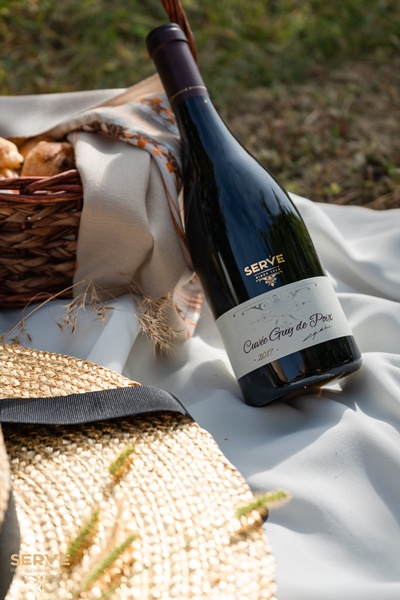
Cuvée
Discover our selection
Exclusive wines in limited editions with individually numbered bottles. The fruit of oenological experience since 1994 and of the symbiosis of the vineyard with the environment in which it grows and develops and with the people who care for it. Complex blends, both classic and novel. Matured in barrels between 3 and 18 months, and then in bottle between 6 months and 5 years. The range contains 10 wines dedicated to the founders' family members.

Terra Romana
Discover our selection
Terra Romana is the expression of terroirs. They are wines representative of the SERVE Winery identity — clean, expressive, well-structured and built to accompany the table and conversation. Each label reflects the character of the land and the maturity of a winery that contributed to the rebirth of modern Romanian wine. Terra Romana is about assumed roots, about tradition carried forward with rigor and about wines that offer confidence, from the first tasting to the last glass.

Vinul Cavalerului
Ask a distributor
The first SERVE wine range: the beginning of modern viticulture in Romania. A collection of wines focused on the typical characteristics of the varieties, combining the typical environmental conditions of Dealu Mare with the refinement and experience of winemakers from France, where we did our apprenticeship. The range contains 9 wines.

Re:vivre
Discover our selection
RE:Vivre is about the joy of living in the present. About slowing down and rediscovering the pleasure of simple, authentic things, without excess and without artifice. The wines are modern, vibrant and friendly, created for urban restaurants and winebars that seek freshness, elegance and ease of expression, but also a partner winery with tradition in quality and style. RE:Vivre brings the energy of the new generation, supported by the experience of a house that knows how to make wine with rigor and consistency.